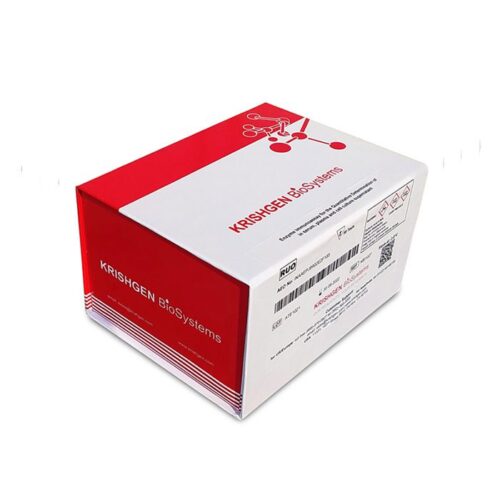
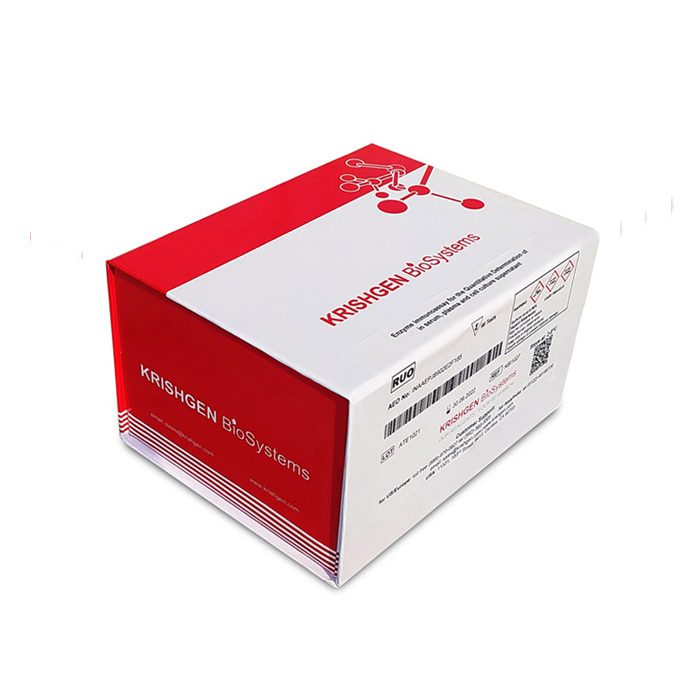
This GENLISA Mouse Tumor Necrosis Factor Alpha (TNF-A / TNFA) ELISA includes features like:
– Ready to use protocol with break-apart wells for ease of use
– Standardisation and High Reproducibility
– Lot to Lot Consistency
– Accuracy and Precision
Validated against seven points for a “GOLD RING” Standard Quality ELISA – the benchmark sign for Krishgen Quality. The GENLISA ELISA kits are used for assessing the specific biomarker in samples analytes which may be serum, plasma, tissue homogenates and other biological fluids. The kit uses monoclonal antibodies to ensure a high degree of sensitivity and specificity in the estimation of the analyte.
A mouse TNF ELISA almost universally measures TNF-alpha (TNF-). Specifically, it detects the soluble homotrimer form of Tumor Necrosis Factor-alpha (TNF-), which is a pro-inflammatory cytokine produced by activated macrophages, T cells, and other cells. Incase you wish a high specificity Mopuse TNF ELISA kit, we recommend the GENLISA Mouse TNFalpha ELISA (KB2145, Broad Assay Range: 31.25 – 2000 pg/ml). This GENLISA Mouse TNF kit measures the TNFalpha (Narrow Assay Range:7.81 – 250pg/ml, high sensitivity).
Introduction:
This document presents a discussion of the characteristics of our GENLISA® Mouse Tumor Necrosis Factor Alpha (TNF-A/ TNFA) ELISA (Catalog No KB2145) kit considered by us during the validation of this kit in accordance with ICH Q2 (R1) guidelines. The document is prepared based on tests run in our laboratory and does not necessarily seek to cover the testing that may be required at user’s end for registration in, or regulatory submissions. The objective of this validation is to demonstrate that it is suitable for its intended purpose that is
– detection of Mouse TNF-A.
Validation characteristics considered by us in accordance with the guidelines are listed below:
o Assay Validation
o Standard Curve
o Pharmacokinetic Relevance
o Precision and Reproducibility
o Linearity
The degree of revalidation required depends on the nature of the changes. Certain other changes may require validation as well.
Please note that this validation is performed in our laboratory and will not necessarily be duplicated in your laboratory. This data has been generated to enable the user to get a preview of the assay and the characteristics of the kit and is generic in nature. We recommend that the user performs at the minimum; the spike and recovery assay to assure quality results. For a more comprehensive validation, the user may run the protocols as suggested by us herein below to develop the parameters for quality control to be used with the kit.
Background:
Mouse Tumor Necrosis Factor Alpha (TNF-A /TNFA) is a potent pro-inflammatory cytokine produced primarily by activated macrophages, monocytes, T lymphocytes, and other immune cells, playing a critical role in the regulation of immune responses, inflammation, apoptosis, and host defense mechanisms. TNF-A is a key mediator in the initiation and progression of inflammatory and autoimmune diseases and is widely studied in murine models of rheumatoid arthritis, inflammatory bowel disease, sepsis, cancer, infectious diseases, and other immune-related disorders. Elevated TNF-A levels are associated with increased inflammatory activity and disease severity, making it an important biomarker for monitoring immune activation and therapeutic response. The Mouse TNF-A (TNFA) ELISA is designed for the quantitative determination of TNF-A in mouse serum, plasma, cell culture supernatants, tissue homogenates, and other biological samples, providing a reliable tool for cytokine profiling, biomarker research, drug discovery, vaccine development, and immunological studies involving mouse models.
1. Purpose
To assess the specificity, assay performance, and clinical relevance of the GENLISA® Mouse Tumor Necrosis Factor Alpha (TNF-A/ TNFA) ELISA developed using Anti-Mouse TNF alpha antibody as capture protein.
2. Experimental Design
– `A sandwich ELISA was performed using Anti-Mouse TNF alpha antibody as capture protein.
– Standards prepared for Mouse TNF-A.
– Assay Concentration Range: 0 – 2000 pg/ml.
– Signal (% absorbance) plotted versus concentration.
The GENLISA® Mouse Tumor Necrosis Factor Alpha (TNF-A/ TNFA) ELISA employs a highly specific sandwich immunoassay strategy to ensure selective capture and detection of Mouse TNF-A present in the sample. Affinity-purified anti-Mouse TNF-A antibodies immobilized on the microplate surface are designed to specifically bind TNF-A while preserving its native antigenic structure and epitope integrity. Following capture, a biotinylated anti-Mouse TNF-A detection antibody binds to a distinct epitope on the cytokine, resulting in the formation of a stable antibody–antigen–antibody sandwich complex. Subsequent binding of Streptavidin-HRP and development with TMB substrate generates a colorimetric signal directly proportional to the concentration of Mouse TNF-A present in the sample. Other cytokines and unrelated proteins exhibit minimal or no binding under these assay conditions, reflecting the high specificity of the antibody pair and ensuring reliable quantification of Mouse TNF-A in biological samples.
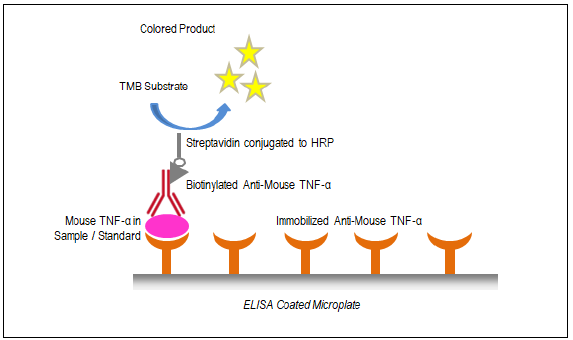
ELISA kits for Mouse-TNFA estimation offered by KRISHGEN uses Anti-Mouse TNF-A capture proteins as above
3. Assay Validation
– IC50 Value : ~ 1096 pg/ml (within 0-2000 pg/mL assay range). – LLOQ : ~ 31.25 pg/ml.
– Clinical Cmax Values*: NA – Mouse TNF-A is an endogenous cytokine produced by immune cells and is not administered therapeutically; therefore, no fixed dose-dependent Cmax values are defined.
– Published studies indicate that circulating TNF-A concentrations are generally low or undetectable in healthy mice but can increase substantially during inflammatory, infectious, autoimmune, or tumor-associated conditions.
*Values are approximate and may vary depending on mouse strain, disease model, sample type, timing of sample collection, and experimental conditions reported in published studies.
* published data
– Precision:
– Intra-Assay CV : <10%.
– Inter-Assay CV : <12%.
– Inter-Operator CV : <10%.
4. Standard Curve
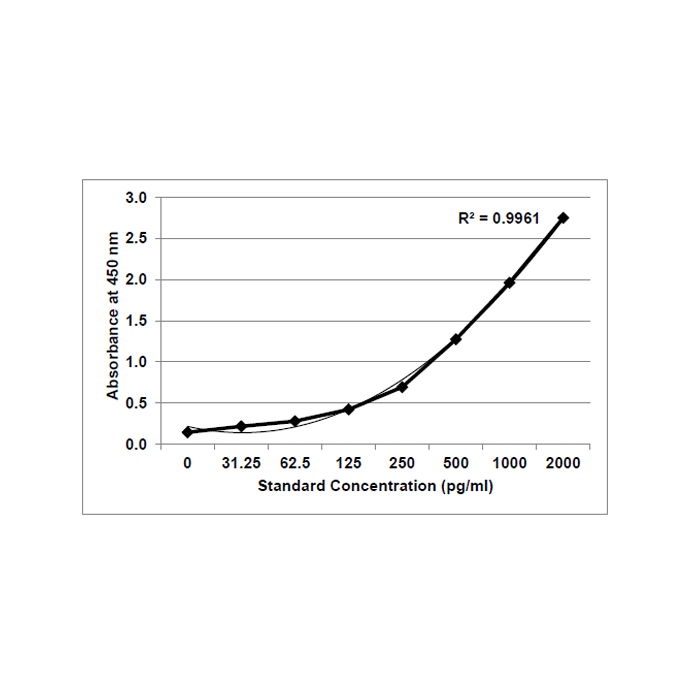
Below is the standard curve for Mouse TNF-A Sandwich ELISA assay:
Linearity and Range
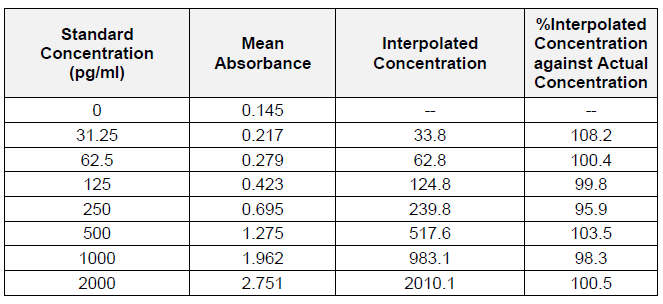
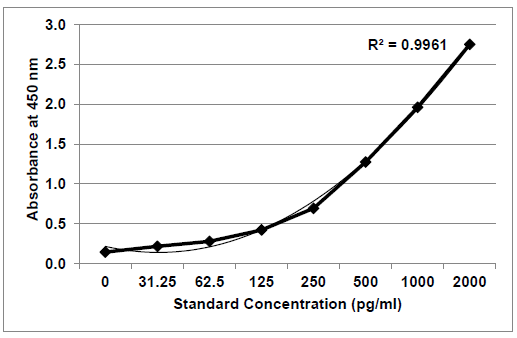
5. LOD and LOQ
– LOD Absorbance : ~30 pg/ml
– LOQ Absorbance : ~31.25 pg/ml
6. Pharmacokinetic Relevance
The assay is designed to detect clinically relevant levels of Mouse Tumor Necrosis Factor Alpha (TNF-A /TNFA) in biological samples, making it suitable for cytokine quantification, inflammation studies, and immunological research applications.
The Mouse TNF-A ELISA demonstrates high sensitivity, typically within the pg/mL range, ensuring accurate detection and quantification of TNF-A across physiologically and pathologically relevant concentrations.
Published studies evaluating TNF-A expression in murine models indicate variable cytokine levels depending on the disease model, inflammatory stimulus, and sample type:
• TNF-A concentrations are influenced by the degree of immune activation, disease severity, infection status, and experimental treatment conditions.
• Baseline TNF-A levels in healthy mice are generally low or undetectable, while significantly elevated concentrations may be observed in inflammatory, autoimmune, infectious, and tumor-bearing models.
• Increased TNF-A levels are often associated with enhanced inflammatory responses, tissue damage, and disease progression.
Thus:
• TNF-A concentrations in mouse serum, plasma, cell culture supernatants, and tissue homogenates typically fall within the measurable range of the ELISA.
• The assay working range enables reliable differentiation between basal, moderate, and elevated cytokine expression levels.
• In samples exhibiting very high TNF-A concentrations, appropriate sample dilution may be required to ensure measurements fall within the linear dynamic range of the assay.
• The assay is therefore suitable for cytokine profiling, evaluation of inflammatory responses, therapeutic efficacy studies, and biomarker research in mouse models.
7. Precision and Reproducibility
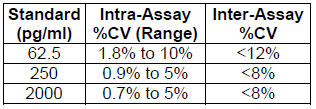
Precision was assessed by analysing three standard concentrations (62.5 pg/ml, 250 pg/ml, and 2000 pg/ml). Each concentration was tested in triplicate across three independent assay runs. %CV (Coefficient of Variation) was calculated within runs (intra-assay precision) and across runs (inter-assay precision).
Acceptance Criteria:
Intra-assay %CV should be ≤15% for samples.
Inter-assay %CV should be ≤15% for samples.
%CV at LLOQ (Lower Limit of Quantitation) allowed up to 20%.
Precision Results Summary:
Observations:
Intra-assay precision was consistently less than 10% across all levels tested.
Inter-assay precision was consistently less than 12%.
All precision values met the acceptance criteria for ELISA validation.
Conclusion:
The GENLISA® Mouse Tumor Necrosis Factor Alpha (TNF-A/ TNFA) ELISA demonstrates excellent intra- and inter-assay precision. These results support the assay’s reliability and reproducibility for routine use in pharmacokinetic and bioanalytical studies.
8. Linearity
The linearity study was performed to evaluate the ability of the GENLISA® Mouse Tumor Necrosis Factor Alpha (TNF-A/ TNFA) ELISA to generate results that are directly proportional to the concentration of Mouse TNF-A across a range of sample dilutions.

Observations:
Mouse TNF-A -spiked serum samples demonstrated recoveries ranging from 82–112% across the tested dilution series.
Mouse TNF-A -spiked EDTA plasma samples demonstrated recoveries ranging from 83–118% across the tested dilution series.
Mouse TNF-A -spiked heparin plasma samples demonstrated recoveries ranging from 80–99% across the tested dilution series.
All matrices exhibited acceptable dilution linearity with recoveries within the predefined acceptance criteria.
9. Conclusion
The GENLISA® Mouse Tumor Necrosis Factor Alpha (TNF-A/ TNFA) ELISA is validated for sensitivity, specificity, precision, and accuracy, and is appropriate for pharmacokinetic applications in regulatory settings.