 Powered by Bioz
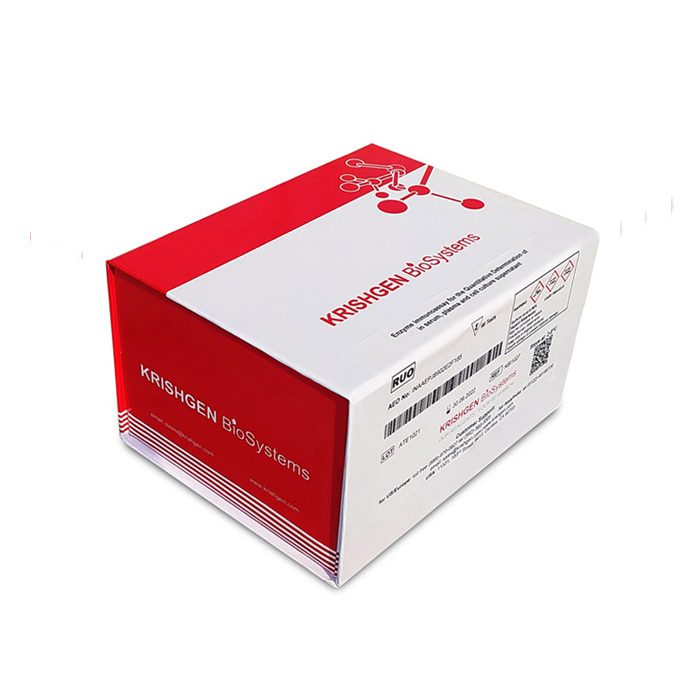
This GENLISA Mouse Interleukin 23 (IL-23) ELISA includes features like:
– Ready to use protocol with break-apart wells for ease of use
– Standardisation and High Reproducibility
– Lot to Lot Consistency
– Accuracy and Precision
This document presents the validation characteristics of the GENLISA® Mouse Interleukin-23, IL-23 ELISA Kit (Catalog No. KLM0519), as evaluated in accordance with the ICH Q2 (R1) guidelines. The validation data presented herein are based on studies performed in our laboratory and are intended to demonstrate the analytical performance of the assay. This document does not necessarily encompass all validation studies that may be required by end users for product registration or regulatory submissions. The objective of this validation is to demonstrate that the assay is suitable for its intended purpose, namely the quantitative detection of Mouse Interleukin-23 (IL-23).
Mouse Interleukin-23 (IL-23) is a heterodimeric pro-inflammatory cytokine composed of the p19 and p40 subunits and is primarily produced by activated antigen-presenting cells, including dendritic cells and macrophages. IL-23 plays a critical role in regulating innate and adaptive immune responses by promoting the expansion, maintenance, and survival of T helper 17 (Th17) cells, leading to the production of inflammatory cytokines such as IL-17 and IL-22. Through these functions, IL-23 is involved in host defense against extracellular pathogens while also contributing to the pathogenesis of chronic inflammatory and autoimmune disorders. In mouse models, IL-23 serves as an important biomarker for studying immune regulation, inflammation, infectious diseases, and the mechanisms underlying autoimmune conditions. Quantitative measurement of mouse IL-23 in biological samples provides valuable insights into disease progression, immune responses, and the evaluation of therapeutic interventions in preclinical research.
1. Purpose
To assess the specificity, analytical performance, and suitability of the GENLISA® Mouse Interleukin-23 (IL-23) ELISA Kit for the quantitative determination of mouse IL-23 using anti-mouse IL-23-specific capture and detection antibodies.
2. Experimental Design
– A sandwich ELISA was performed using SLAMF7 as capture protein.
– Standards prepared for mouse IL-23.
– Assay Concentration Range: 0 pg/ml – 1000 pg/ml.
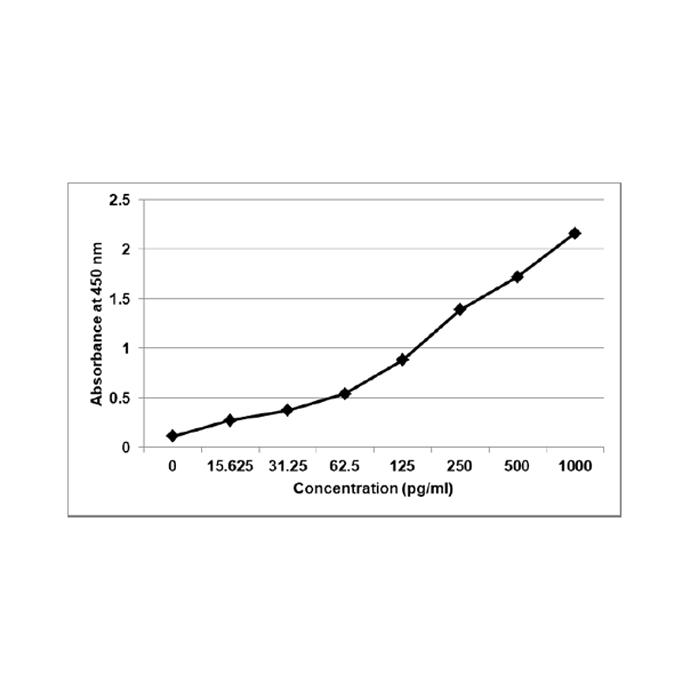
– Signal (% absorbance) plotted versus concentration. The GENLISA® Mouse Interleukin-23 (IL-23) ELISA is based on a highly specific sandwich enzyme-linked immunosorbent assay (ELISA) principle for the quantitative determination of mouse IL-23. Microplate wells are pre-coated with monoclonal antibodies specific for mouse IL-23. During the assay, mouse IL-23 present in standards and samples binds specifically to the immobilized capture antibodies. Following incubation and washing to remove unbound components, a biotin-labeled anti-mouse IL-23 detection antibody is added, which binds to a different epitope on the captured IL-23 molecule. Streptavidin conjugated to horseradish peroxidase (HRP) is then added, forming a stable antibody–antigen–antibody detection complex.
After a subsequent washing step to eliminate non-specifically bound material, tetramethylbenzidine (TMB) substrate is added. The HRP enzyme catalyzes the conversion of the substrate to a blue-colored product, the intensity of which is directly proportional to the concentration of mouse IL-23 present in the sample. The enzymatic reaction is terminated by the addition of stop solution, producing a yellow-colored end product, and the absorbance is measured at 450 nm. The concentration of mouse IL-23 in the samples is determined by comparison with a standard calibration curve.

3. Assay Validation
– Assay Range: ~ 15.625–1000 pg/ml.
– LLOQ: ~ 9.375 pg/ml.
– Specificity
High sensitivity and excellent specificity for Mouse IL-23. No significant cross-reactivity or
Interference with IL-23 analogues was observed
– Precision:
– Intra-Assay CV: <8%.
– Inter-Assay CV: <10%.
4. Standard Curve
Below is the standard curve for Elotuzumab Sandwich ELISA assay:
Linearity and Range


5. LOD and LOQ
– LOD: (Approx ~5.26 ng/ml)
– LOQ: (Approx ~9.375 ng/ml)
6. Pharmacokinetic Relevance
The assay is designed to cover the clinically relevant serum concentrations of Elotuzumab observed following intravenous therapeutic dosing, making it suitable for pharmacokinetic evaluation and therapeutic monitoring. The Elotuzumab ELISA demonstrates sensitivity within the ng/ml range, which lies well within the validated assay range, ensuring accurate quantification across clinically meaningful exposure levels.
Published pharmacokinetic data for elotuzumab indicate systemic exposure consistent with therapeutic monoclonal antibodies:
• Following recommended dosing regimens (typically 10 mg/kg and/or 20 mg/kg in combination therapy), the reported initial Cmax is approximately 200–300 μg/ml.
•With repeated dosing (weekly during initial cycles followed by biweekly or monthly administration depending on regimen), steady-state peak concentrations generally reach approximately 300–500 μg/ml.
• Higher exposure levels may be observed depending on dose level, combination regimen, dosing frequency, and individual patient variability.
Thus:
• At clinically relevant intravenous doses, elotuzumab serum concentrations fall within the measurable range of the ELISA, following appropriate sample dilution.
• The assay working range enables reliable differentiation across varying systemic exposure levels.
•Given the relatively high circulating concentrations associated with therapeutic dosing, routine dilution of clinical samples is recommended to ensure measurements fall within the linear dynamic range of the assay.
• The assay is therefore suitable for pharmacokinetic profiling, dose–exposure analysis, and therapeutic monitoring of elotuzumab in human serum or plasma.
7. Precision and Reproducibility
Precision was assessed by analysing three standard concentrations representing the low, medium, and high regions of the assay calibration range (15.625 pg/ml, 250 pg/ml, and 1000 pg/ml). Each concentration was tested in triplicate across three independent assay runs. Precision was evaluated by calculating the coefficient of variation (%CV) within individual assay runs (intra-assay precision) and across independent assay runs (inter-assay precision).
Acceptance Criteria:
• Intra-assay %CV should be ≤15% for all samples.
• Inter-assay %CV should be ≤15% for all samples.
• %CV at the Lower Limit of Quantification (LLOQ) may be up to 20%.
Precision Results Summary

The assay demonstrated acceptable repeatability and intermediate precision across the validated analytical range, with all intra-assay and inter-assay precision values meeting the predefined acceptance criteria.
Observations:
• Intra-assay precision was consistently within 8% CV across the validated concentration range.
• Inter-assay precision was consistently within 10% CV across independent assay runs.
• All precision values met the predefined acceptance criteria for ELISA validation, demonstrating acceptable repeatability and intermediate precision.
8. Conclusion
The GENLISA® Mouse Interleukin-23 (IL-23) ELISA has been validated in accordance with ICH Q2 (R1) guidelines for its intended analytical application. The assay demonstrated acceptable sensitivity, specificity, precision, linearity, recovery, and reproducibility over the validated concentration range of 15.625–1000 pg/ml. The established limit of quantification (LOQ) of 9.375 pg/ml enables reliable detection of low concentrations of mouse IL-23. The assay is therefore considered suitable for the quantitative determination of Mouse Interleukin-23 (IL-23) in mouse serum, plasma, and other validated biological samples for research applications.